Targeting the IL-1 Pathway: GenSci161 Showcased at NextGen 2026
Therapeutic Areas

Time
2026-11-11

Readership
80
Share


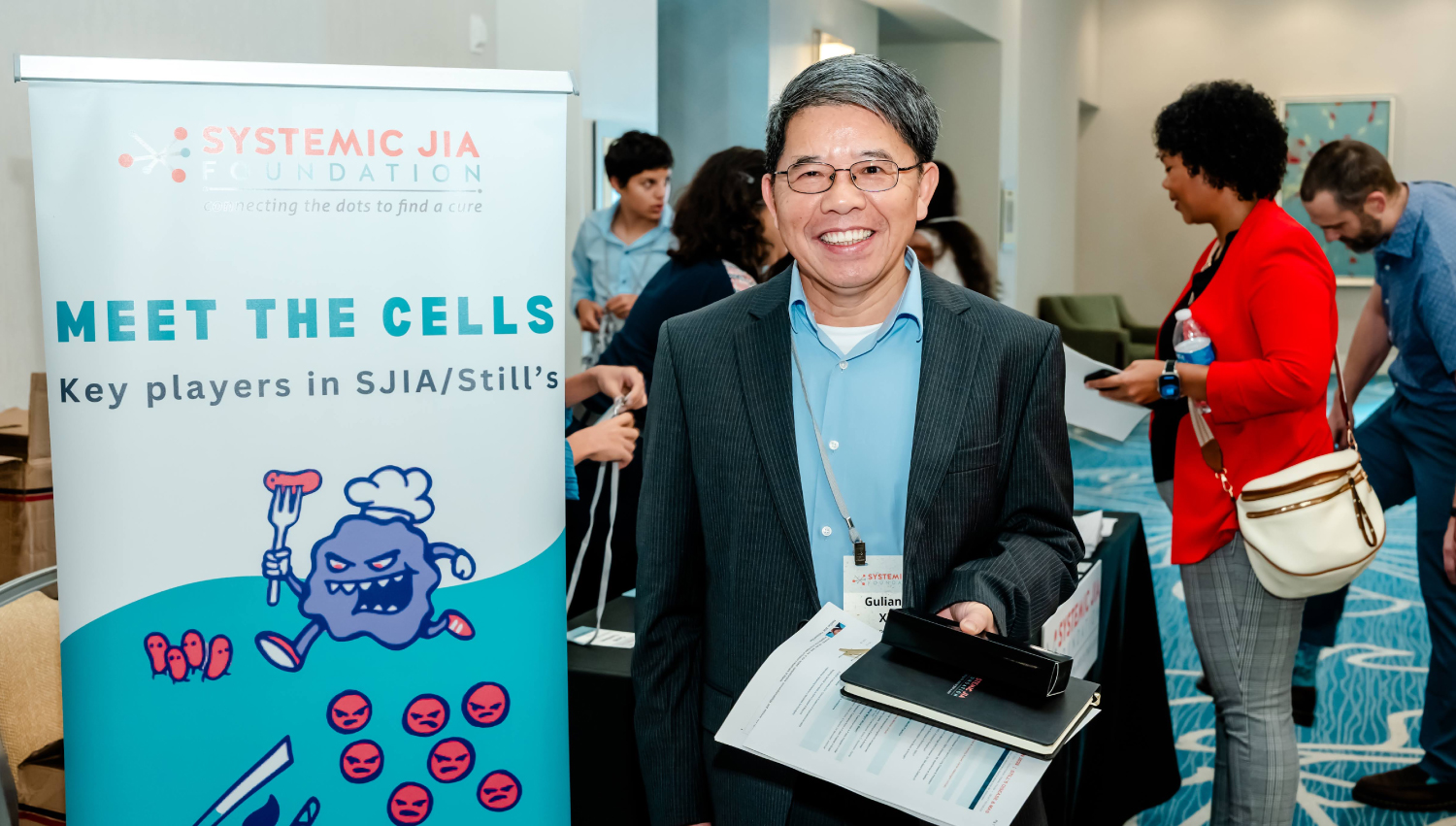
On November 6-7, the NextGen2026 Conference was held in Florida, the US, where Dr. Guliang Xia, Head of Immunology Research Center at GenSci was invited to deliver a speech titled GenSci161: Mechanism and Therapeutic Rationale for Dual IL-1α/IL-1β Inhibition.
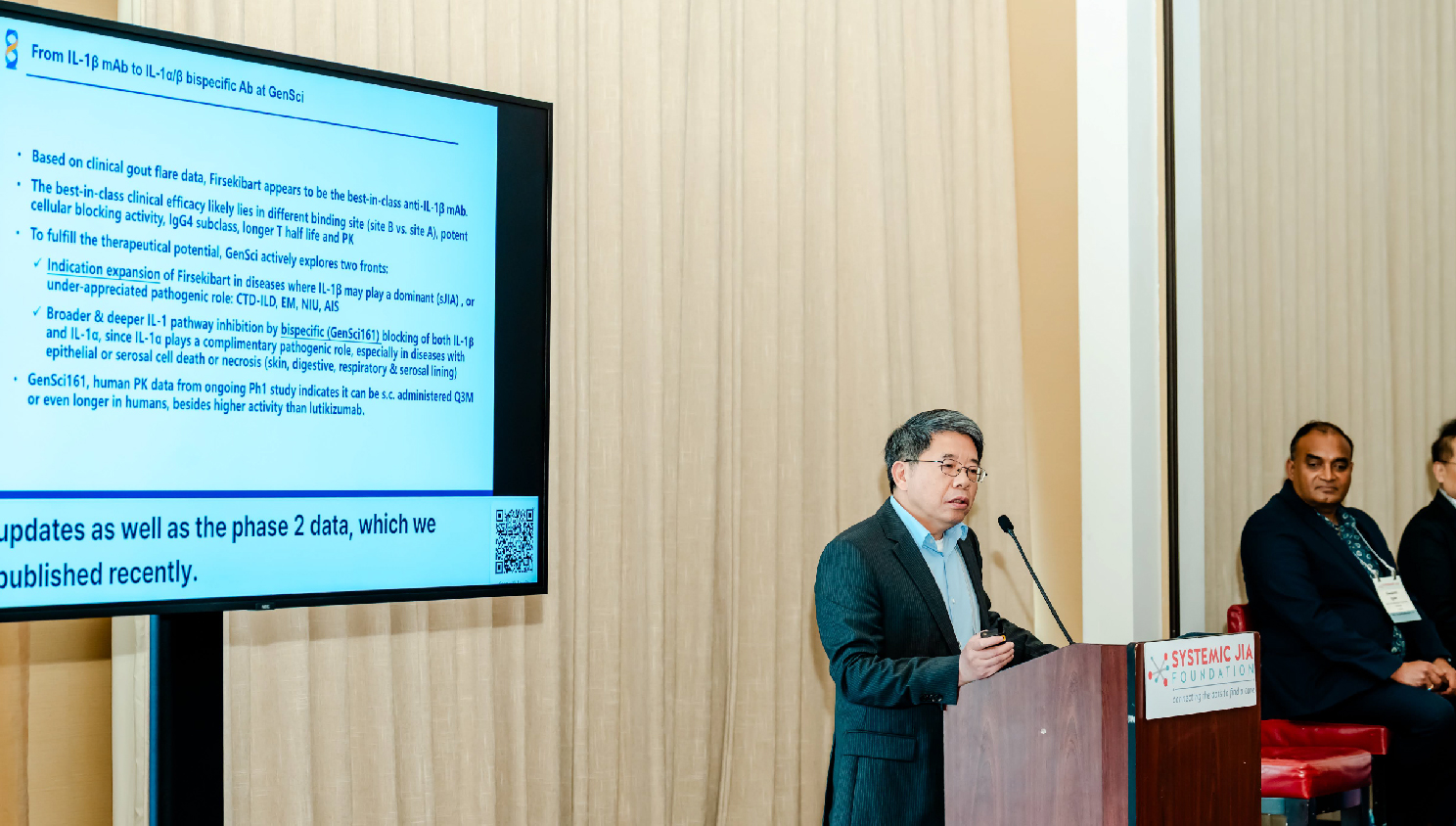
Dr. Guliang Xia, Head of Immunology Research Center, GenSci
Organized by the Systemic JIA Foundation, the NextGen Conference is an international meeting focused on better treatments for systemic juvenile idiopathic arthritis (SJIA), especially for patients who do not respond to current biologics. FDA officials, patients and advocates, clinicians, researchers, and industry scientists take part in interactive discussions on SJIA, Still’s disease, and related complications, including interstitial lung disease (ILD) and macrophage activation syndrome (MAS).
GenSci161 is a bispecific IL-1α x IL-1β antibody discovered and developed by GenSci for multiple immune and inflammatory diseases. Preliminary Phase 1 data of GenSci161 has demonstrated a long half-life in humans, and the pharmacokinetics (PK) profile supports a Q3M or even longer dosing potential in patients with subcutaneous administration. Such long life and high blocking potency are derived from the bispecific molecule format design and the great foundation of GenSci’s IL-1β antibody Firsekibart.
The Phase 2 data of Firsekibart in pediatric patients with SJIA was also presented by Prof. Li Caifeng, the leading PI of Firsekibart in SJIA clinical study and the head of Rheumatology at Beijing Children’s Hospital. Firsekibart has demonstrated the best cellular potency and best-in-class clinical efficacy in adult gout flares and SJIA patients (available human data), which is likely derived from its unique binding/blocking site, Fc design, and favorable human PK and safety profiles.
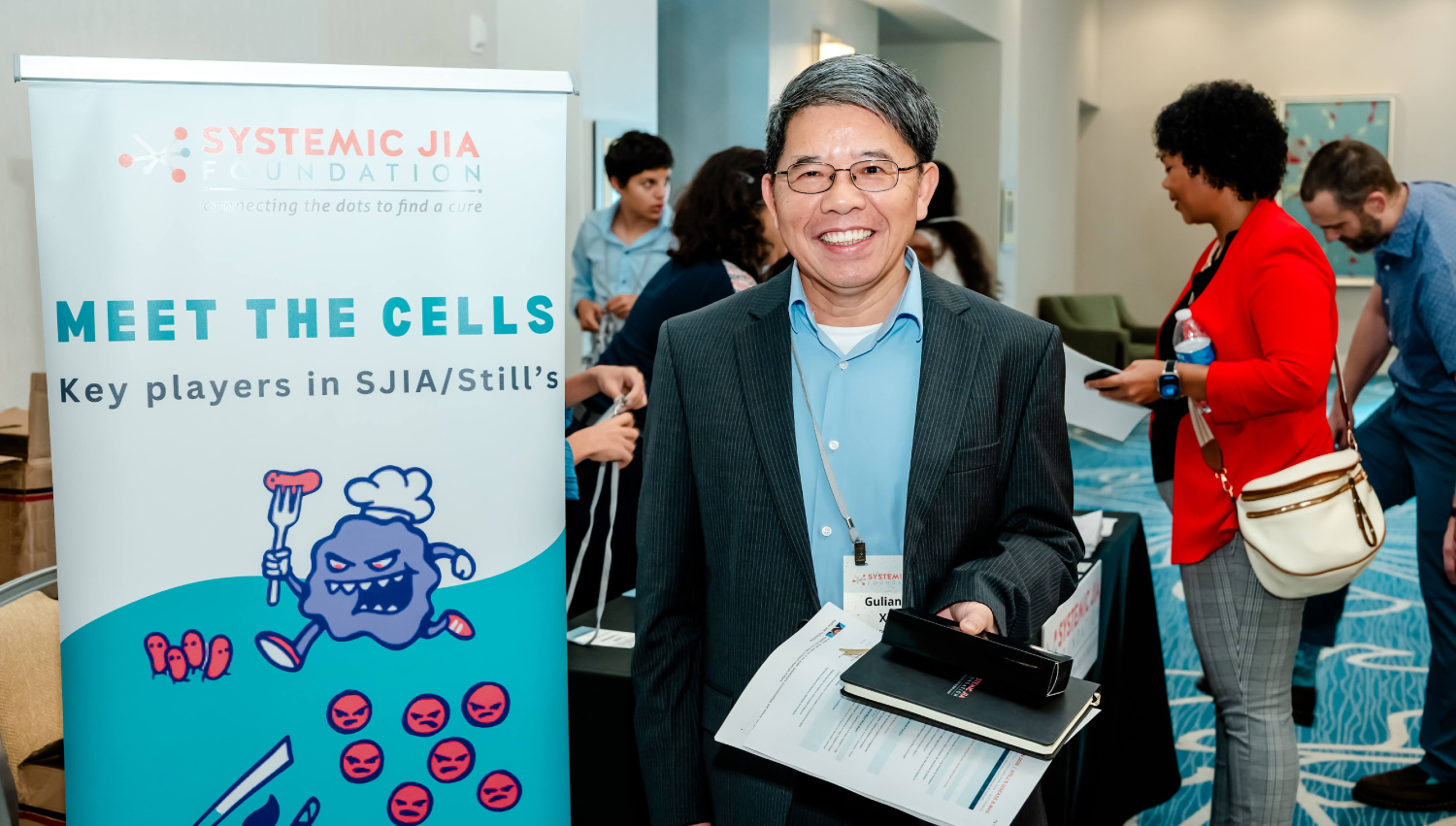
Dr. Guliang Xia attended NextGen2026 as an invited speaker
As a core target of GenSci’s research in inflammation, IL-1 exemplifies the company's R&D strategy of focusing on core human disease pathways to unlock broader therapeutic potential. For one thing, the company is actively exploring indication expansion of Firsekibart in diseases where IL-1β may play a dominant or under-appreciated pathogenic role, including autoimmune interstitial lung disease (ILD), endometriosis, noninfectious uveitis, and acute ischemic stroke. For another, it is advancing multi-specific antibody approaches(e.g. GenSci161 & GenSci186) to achieve broader and deeper inhibition of the IL-1 pathway. For example, GenSci161 simultaneously blocks IL-1β and IL-1α, since IL-1α plays a complimentary pathogenic role, especially in diseases with epithelial or serosal cell death or necrosis (skin, digestive, respiratory & serosal lining).
GenSci will continue to expand the reach of its therapies and advance the development of multispecific molecules targeting key pathways such as IL-1, with the goal of bringing new treatment options to more patients with immune and inflammatory diseases.